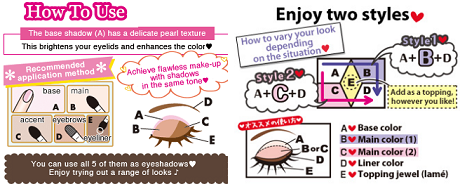
5,219 JPY

( US$ 33.89 /  UK£ 24.75 /  EUR 28.53 /  A$ 48.89 /  C$ 46.45 )

Standard Shipping: 1,130 JPY for Europe
Expedited Shipping: 3,150 JPY for Europe

2,452 JPY

( US$ 15.92 /  UK£ 11.63 /  EUR 13.40 /  A$ 22.97 /  C$ 21.82 )

Standard Shipping: 1,130 JPY for Europe
Expedited Shipping: 3,150 JPY for Europe

J-Subculture News
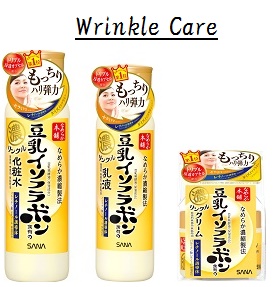
Wonders of Soy Milk

You'd be surprised to know the benefits of soy milk for your skin. The Japanese embrace the use of soy in their beauty products because it's natural and does wonders for the skin. Today we at J-Subculture would like to introduce you to a line of soy milk beauty products called Nameraka Honpo Soy Milk Isoflavone! In these soy milk beauty products, soy isoflavones are used. Through these beauty products, your skin condition will immediately improve. The soy isoflavones help to add moisture to you
DETECTIVE PIKACHU – Hollywood D...
【J-SUB Shop Product Introductions – Pikachu related Items】 Pikachu debuts in Hollywood!!!!!!!!!!! And that is for the first time in live-action for Pikachu! From appearance he looks all cute and snugly…but inside a “middle-aged man”?! Hilarous ((*´∀`)) Not only in Japan, but much-loved around the world, this Pikachu finally receives its long-awaited live-action movie adaption☆ Have you taken a closer look at it yet? We thought to take up on the occa
Japanese Makeup - Eyelashes
A popular must-do for Japanese-styled make up is putting on false eyelashes. Japanese people tend to have eyelashes that are fine and short. Since most Japanese people want to go for the dolly-eyed, anime-styled look of bigger, fuller eyes, many use false eyelashes when putting on their makeup. Putting on false eyelashes volumize one's eyes, producing a more open-eyed, brighter look. False eyelashes are a staple to "kawaii" make up and fashion. Depending on the type and color of the ey
Furikake!
Furikake is a Japanese topping which usually is a mixture of dried tuna, sesame seeds, salt, sliced or seasoned seaweed, etc. Furikake is mainly used to sprinkle over steamed rice and noodles, but it is also used for salads, soups, pasta and sushi rolls.   Here it goes a brief history… Around 1912, a pharmacist called Mr. Suekichi Yoshimaru of Futaba, came up with the idea to make a product with ground fish bones to compensate for a lack of calcium in the Japanese diet. Small fish w